
Yi-Ting Miao | Taiwan
Settling in Berlin: experiences, tips, and favorite moments.
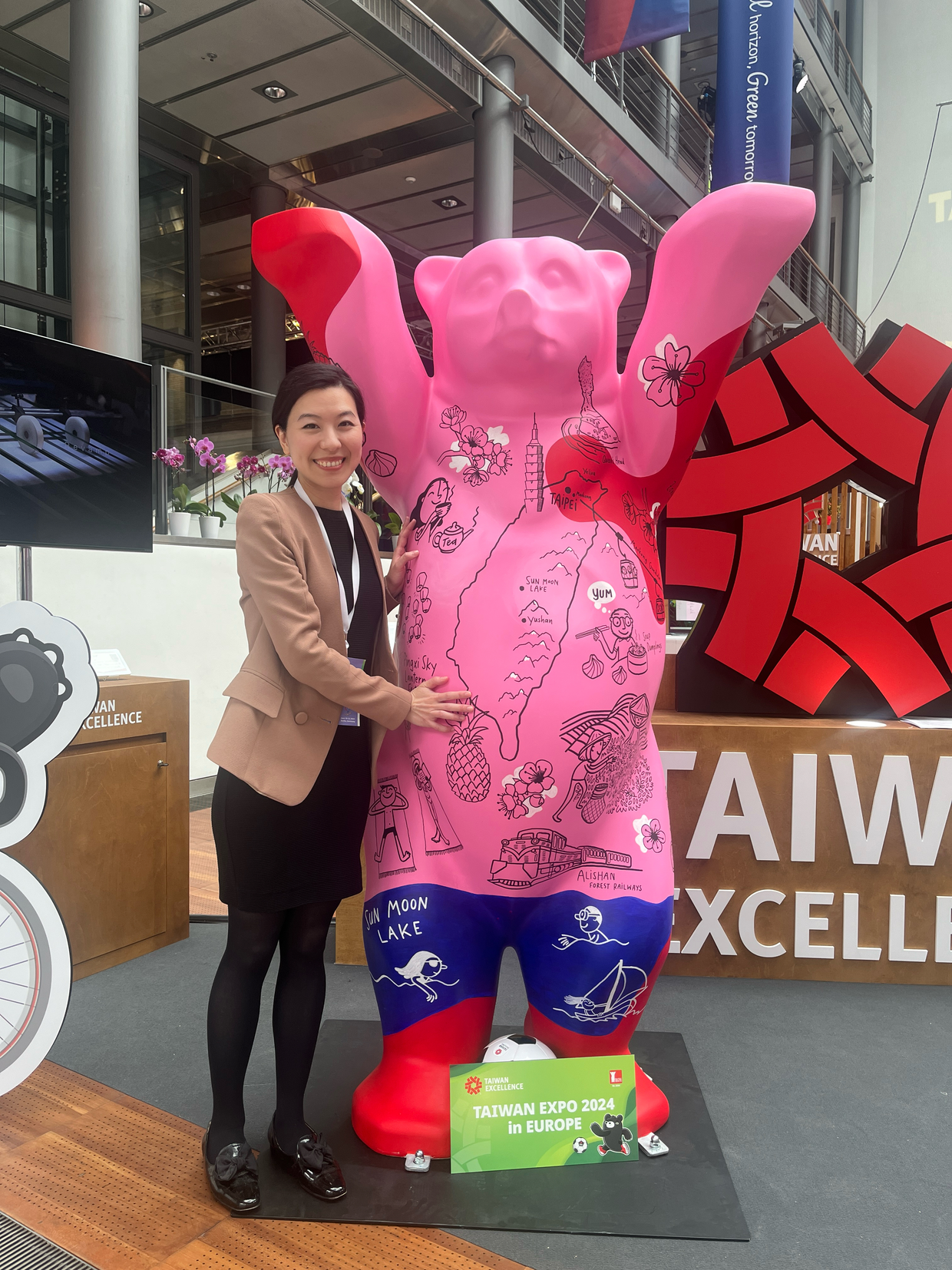
Background: I come from Taiwan. Shortly before graduating in Taiwan, I felt a strong urge to continue my education. So in 2009, immediately after completing my bachelor's degree in Taipei, I went to Heidelberg University to study translation studies (German/English). After graduating in Heidelberg, I moved to Berlin – and have stayed here ever since.
1. Where do you work?
When I was still in Taiwan, I got a job at the Taiwanese branch of Edelman, the US PR agency. This experience became the starting point and orientation point for my professional career. Even later, when I worked as an intern at Daimler in Esslingen – a great time with wonderful colleagues and exemplary corporate structures – I still felt that my heart was in PR and marketing for the long term. That's why I always tried to gain a foothold in this field in Germany, even though it's often not easy as a non-native speaker.
After four and a half years in brand management in the cross-border e-commerce industry, my path crossed with Storymaker. It is a PR agency that connects German and Asian markets in both directions – an absolute dream come true for me! The time I spent there was invaluable, both professionally and personally. Even though our paths are now parting ways due to the difficult economic situation, I am deeply grateful for everything Storymaker has made possible for me.
2. Why did you choose Berlin?
I come from Taipei, the capital of Taiwan. Anyone familiar with Asian cities such as Shanghai, Tokyo or Seoul can easily imagine what Taipei is like: lively, colourful and never quiet. For me, Berlin is the German city that most resembles my home. People and cultures from all over the world come together here, there are an incredible number of opportunities, and life feels flexible and pleasantly uncomplicated at the same time.
3. What do you love about Berlin?
When I first moved to Berlin from Heidelberg, I was often surprised – sometimes even a little shocked – by the typical "Berlin way". Berliners can express their friendliness in a tone that almost sounds like an insult: a little rough, but warm-hearted and completely genuine. You just have to get used to it.
And then there's the convenience and flexibility of the city, which I haven't experienced anywhere else in Germany. You don't have to worry about shops closing at 6 p.m., there being hardly any leisure activities, or not being able to find good public transport connections home after a meeting at 9 p.m. (these are all real experiences of mine).
Sure, sometimes this city really drives me crazy, but Berlin's cosmopolitanism is beyond question. Heidelberg remains the starting point of my entire trip to Germany, but today I am ready to call Berlin my second home.
4. What challenges did you have to overcome and how did you manage it?
That's a complex question, because every phase actually brings countless setbacks and frustrations: leaving your comfort zone, separating from family and friends, arriving in a completely foreign culture with a foreign language, competing with locals in the job market, and much more. I still remember exactly how I cried with fear all alone in my room during my very first emergency stay at Martin Luther Hospital. It was only in retrospect that I realised that all these negative feelings were part of a major adjustment process.
For a long time, I wanted to prove to myself and others that I could do it too, as a foreigner! That's why I was often the only Asian woman in the room at university, at work and even among my friends. I desperately wanted to be perceived as "an Asian woman who is totally Germanised and speaks German like a native speaker". I thought that only then would I be truly integrated and welcome here. But this dogged thought only exhausted and frustrated me. Because no matter how hard I try, I'm just not German.
At some point, life teaches you how to live "healthily". I had my "aha" moment not too long ago: my migrant identity is not a weakness, but a special feature that sets me apart. Even if I don't sound like a native speaker, it doesn't affect my professionalism or prevent me from doing a good job.
There will always be new challenges. But a focused and positive attitude has carried me through the last 16 years. And I am sure that it will carry me through the years to come.
5. Who or what helped you settle in Berlin?
My boyfriend was a native Berliner and helped me incredibly – with negotiations with the immigration office (if you know, you know), with complicated paperwork, or simply with finding my way around the city. I am very grateful that he accompanied me through this intense relocation phase.
As far as my social life was concerned, however, things looked very different: I knew absolutely no one. I built up my network bit by bit – through recommendations, acquaintances and through work. Today, I have a circle of friends who come from very different backgrounds. Some friendships actually developed at work. And I am very happy with where I am now.
6. What advice would you give to someone who is new to Berlin?
Be proud of yourself for making it this far! Being uptight doesn't suit Berlin. Open yourself up to the unique charm of this city. Berlin is big – that means you can discover its many facets: sometimes a free artist, sometimes a quiet storyteller, sometimes a creative young entrepreneur or a serious politician. In Berlin, you will always find the lifestyle that really suits you. Welcome and have fun!