Industrial Production in Berlin
Companies
-
Berlin Partner
 ASML Berlin GmbH
ASML Berlin GmbH
Top Job Partner
ASML ist ein Hightech-Unternehmen und führender Zulieferer der Halbleiterindustrie. Wir stellen die komplexen Lithografie-Maschinen her, die Chiphersteller zur Produktion von integrierten Schaltkreisen oder Computerchips verwenden.
-
Berlin Partner
 Berlin Partner für Wirtschaft und Technologie GmbH
Berlin Partner für Wirtschaft und Technologie GmbH
Top Job Partner
Wirtschafts- und Technologieförderung für Unternehmen, Investoren und Wissenschaftseinrichtungen in Berlin – das bietet die Berlin Partner für Wirtschaft und Technologie GmbH. Zahlreiche Fachexperten bieten maßgeschneiderte Services und eine exzellente Vernetzung zur Wissenschaft.
-
Berlin Partner
 BMW Werk Berlin

BMW Werk Berlin
Top Job Partner
Im BMW Werk Berlin werden die BMW Motorräder gebaut. Das Werk bietet unter anderem Jobs in den Abteilungen mechanische Fertigung, Motorenmontage, Lackiererei, Montage, Bremsscheibeen und Versand. Bereits über 2200 Kollegen arbeiten hier.
-
Berlin Partner
 DAT Deutsche Aufzugstechnik GmbH
DAT Deutsche Aufzugstechnik GmbH
Top Job Partner
-
Berlin Partner
 DAT Deutsche Aufzugstechnik GmbH
DAT Deutsche Aufzugstechnik GmbH
Top Job Partner
-
Berlin Partner
 Francotyp-Postalia Vertrieb und Service GmbH
Francotyp-Postalia Vertrieb und Service GmbH
Top Job Partner
-
Berlin Partner
 Innos GmbH
Innos GmbH
Top Job Partner
Wir sind Wegbereiter für Innovationen.
Uns begeistern Ideen mit Innovationskraft, die Veränderungsprozesse vorantreiben. -
Berlin Partner
 OTIS Holdings GmbH & Co. OHG

OTIS Holdings GmbH & Co. OHG
Top Job Partner
Otis ist der weltgrößte Hersteller von Aufzügen und Fahrtreppen sowie von Installations- und Serviceleistungen. Wir bedienen Kunden in über 200 Ländern und Gebieten auf der ganzen Welt und warten mehr als 2 Millionen Aufzüge und Fahrtreppen weltweit.
-
Berlin Partner
 Pfizer

Pfizer
Top Job Partner
Pfizer produziert innovative Arzneimittel, Impfstoffe und rezeptfreien Produkte wie ThermaCare, VitaSprint und Centrum. Zu den Schwerpunkten der Forschung gehören Krebserkrankungen, Schmerz, Entzündungskrankheiten und Erkrankungen des zentralen Nervensystems.
-
Berlin Partner
 Siemens AG
Siemens AG
Top Job Partner
Digital factories, software to reduce carbon emissions and innovative concepts for high-end trains: It’s our way of creating a more sustainable future for everyone.
We firmly believe that technology with purpose can change the world. Do you? Then join us! -
Berlin Partner
 Talent Service by Berlin Partner
Talent Service by Berlin Partner
Top Job Partner
-
Berlin Partner
 Würth Elektronik eiSos GmbH & Co. KG Competence Center Berlin
Würth Elektronik eiSos GmbH & Co. KG Competence Center Berlin
Top Job Partner
Würth Elektronik eiSos develops, manufactures and sells electronic and electromechanical components. With global presence, we support current market requirements and engage with innovations in energy management up to the FIA Formula E racing sport series for our green future.
-
 CROSSTEC design solution GmbH

CROSSTEC design solution GmbH
CROSSTEC Group International is a provider of interior design solutions and the majority of our clients are global luxury goods and high-end fashion brands with retail stores across the world. We serve a global client base with footprints in various parts of the world.
-
 3YOURMIND

3YOURMIND
With +50 employees across all offices, we are a growing company comprised of an international team who enjoys their work, value their personal growth and bring their best to improve what we do.
We are looking for self-driven and creative people who want to join a customer focused company. -
 5thIndustry

5thIndustry
Berlin is far more than Germany’s start-up capital. With more than 100,000 employees working across hundreds of industrial companies, the city is one of Europe’s most dynamic industrial hubs. Modern manufacturing, cutting-edge research, and digital technologies are closely interconnected, creating attractive opportunities for skilled professionals, engineers, production specialists, and career starters alike.
Berlin’s industrial sector combines established strengths with future-focused fields such as robotics, automation, sustainable manufacturing, and the circular economy.
The city’s key industrial sectors include mechanical engineering, metalworking, chemicals and plastics, as well as food production. Together, they form the backbone of an economy increasingly driven by innovative manufacturing processes, digitalisation, and resource-efficient technologies.
Mechanical Engineering: Driving the Production of Tomorrow
Mechanical and plant engineering is one of Berlin’s core industrial sectors. Companies develop and manufacture highly specialised machinery, automation solutions, and industrial systems for industries such as medical technology, energy, electronics, mobility, and environmental technology.
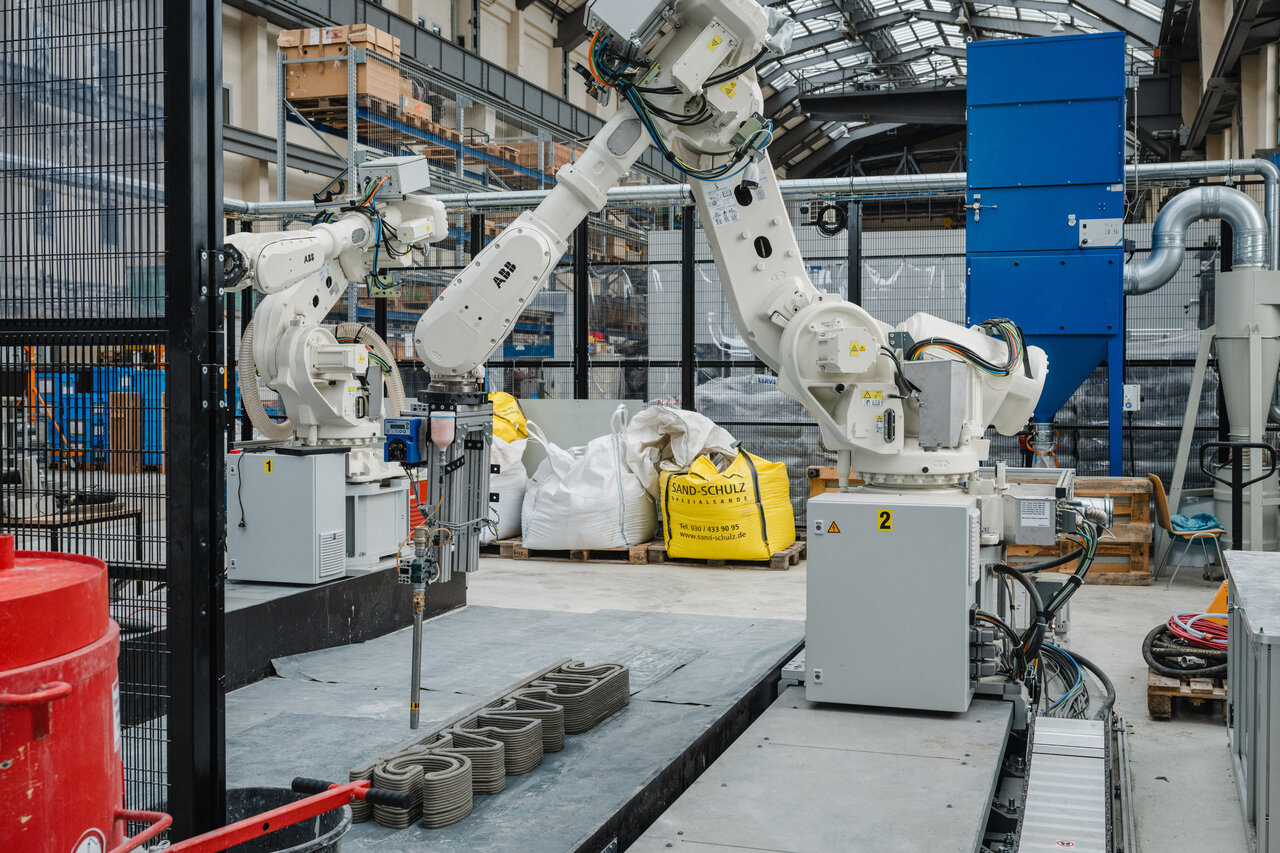
Berlin has established particular strengths in future-oriented technologies such as robotics and industrial 3D printing.
From established industrial manufacturers to innovative hidden champions, the capital offers a diverse ecosystem that is closely connected to research institutions and universities. This collaboration makes Berlin an attractive destination for professionals looking to help shape the future of advanced manufacturing.
Metal Industry: A Key Partner Across Industries
The metal industry is one of the region’s most important supplier sectors. It provides components and intermediate products for automotive manufacturing, mechanical engineering, aerospace, railway technology, and the electrical industry.
At the same time, Berlin-based companies are developing new materials and production technologies that make manufacturing processes more efficient and sustainable.
Close collaboration with research institutions such as BAM, Fraunhofer IPK, and leading technical universities creates ideal conditions for innovation in materials development, precision engineering, and advanced manufacturing technologies.
Chemicals and Advanced Materials
The chemical industry provides essential foundations for numerous future-oriented sectors, ranging from healthcare and medical technology to energy technology and the circular economy.
Companies in Berlin develop specialty chemicals, coatings, plastics, paints, varnishes, and innovative materials for high-tech applications.
A particular strength of the region is the close integration of chemistry, biotechnology, and research. New materials, advanced composites, sustainable production methods, and recycling solutions contribute to more resource-efficient industrial processes. At the same time, the sector benefits from Berlin’s outstanding scientific landscape and vibrant start-up ecosystem.
Food Industry: Where Tradition Meets Innovation
The food industry is one of Berlin’s strongest sectors in terms of both employment and revenue. It covers a broad spectrum ranging from baked goods, confectionery, and beverages to meat and tobacco products.
Many well-known brands manufacture their products in the capital region and serve both national and international markets.
Alongside established manufacturers, companies benefit from Berlin’s role as a test market for new products and emerging food trends. A high concentration of research institutions, highly qualified professionals, and international events such as Green Week continuously drive innovation across the entire value chain.
Research and Science as a Competitive Advantage
One of Berlin’s key advantages as an industrial location is the close collaboration between business and science.
Universities, universities of applied sciences, and non-university research institutions work closely with companies to develop innovations in production technology, materials science, automation, energy efficiency, and digitalisation.
This collaboration provides additional momentum for future-oriented fields such as Industry 4.0, robotics, additive manufacturing, lightweight engineering, and the circular economy, strengthening the competitiveness of Berlin’s industrial sector well beyond the region.
Studies and Careers in Industrial Production
Anyone interested in a career in industrial production will find excellent educational and professional opportunities in Berlin.
Universities and higher education institutions offer degree programmes in mechanical engineering, production engineering, materials science, energy and resource efficiency, and industrial engineering. At the same time, companies are continuously seeking qualified professionals in production, quality management, product development, automation, and project management.
The combination of modern industry, world-class research, and an exceptional quality of life makes Berlin one of the most exciting places to shape the future of manufacturing.
Universities & Higher Education Institutions in Industrial Production
Berlin-Based Associations in Industrial Production
Further Information